
Paleo Diet

The paleo diet, also known as the palaeolithic diet, is a diet mimicking the eating habits of our ancestors who lived in the Palaeolithic era over 2 million years ago. It is based on the idea that our genes and our anatomy haven’t changed much since the Stone Age and that only foods that were available then should be eaten for improved health. Our ancestors used simple tools that made agriculture and farming impossible so food had to be gathered or hunted. That means their menu consisted mainly of fruit, vegetables and meat.
How it works
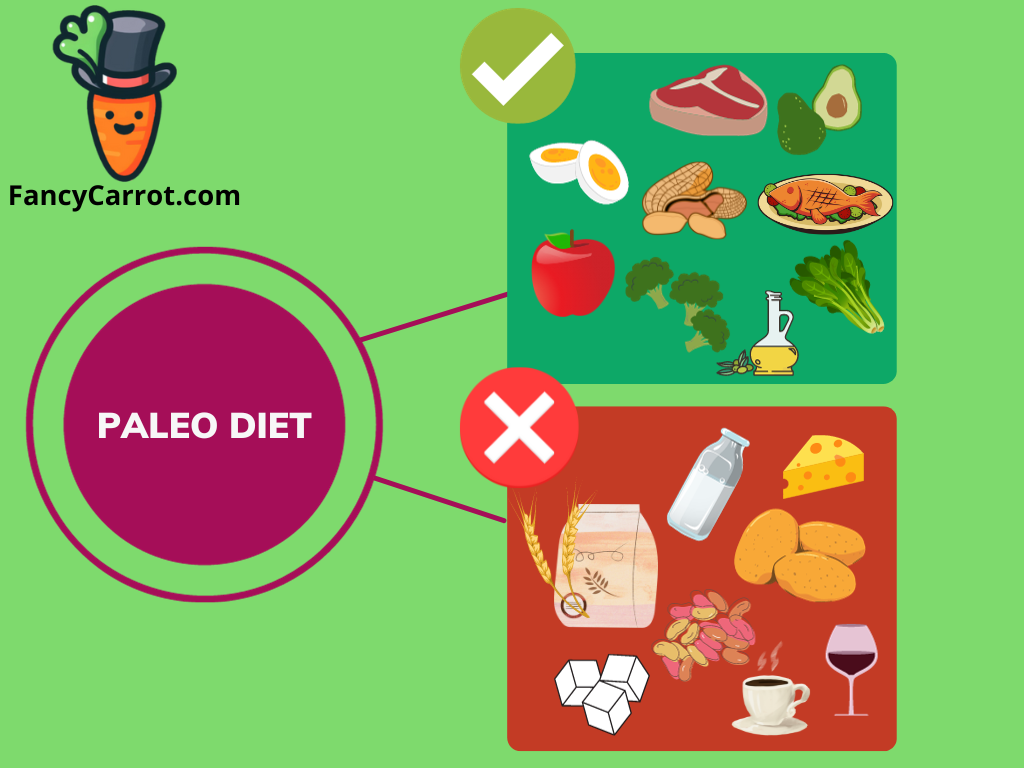
The paleo diet includes meat, fish, fruit, vegetables, nuts and seeds. It’s best to avoid fruits and vegetables with a high glycemic index (GI) such as pineapples, bananas, grapes, potatoes, beans, pumpkins, etc. Also avoid processed foods (our ancestors definitely didn’t have access to hotdogs). However, you can use frozen fruit and vegetables because modern freezing techniques preserve most nutrients in the food.
In general, the paleo diet includes a lot of protein, a moderate amount of unsaturated fats (mostly from fish, meat, avocado, nuts and seeds), a small amount of carbs (especially carbs with a high GI), a lot of fibre, and very little salt and sugar. When choosing meat, go for free-range and free-farmed meat where the animals are grass-fed instead of eating grains. This way the meat will be higher in omega-3 fatty acids.
Calories and portion sizes don’t matter when you’re on the paleo diet so you can eat as much as you want as long as you stick to the allowed foods.
Allowed foods:
- meat
- fish and seafood
- eggs
- nuts and seeds
- fruit with a low GI (such as strawberries, watermelon, melon, avocado, lemon, lime, blackberries, peaches)
- vegetables with a low GI (such as leafy greens, zucchini, celery, broccoli, cauliflower)
- olive oil and coconut oil
- honey in very small quantities
Restricted foods:
- grains
- flour and products made from flour
- sugar
- milk and dairy products
- potatoes
- legumes (such as beans and lentils)
- alcohol
- coffee
- salt
- processed oil (such as canola)
- all processed foods
Paleo diet for weight loss
Primarily, the paleo diet is not a weight loss diet, but if you follow the rules very strictly it’s possible to lose and maintain a healthy weight with this diet. Some research even indicated that the palolithic diet lowers blood pressure and improves cholesterol levels in your blood.
The paleo diet allows a wide range of foods and doesn’t restrict the amounts so with sufficient planning it can become a long-term eating pattern, a healthy weight loss plan and a way to maintain a healthy weight.
Paleo is also great for people with diabetes because it encourages foods with a low GI.
The drawbacks of the paleo diet
- Time-consuming: Paleo requires fresh food so meal planning and cooking require more time than a standard diet. This can be challenging for people with a busy schedule.
- Expensive: The paleo diet can cost more than an average diet because it requires fresh meat, nuts and seeds, all of which are quite expensive.
- Excludes a fair amount of foods: Entire categories of food such as dairy and grains are not allowed on the paleo diet so check product labels before you buy anything that might contain a forbidden ingredient.
- Risk of calcium deficiency: Dairy is not allowed on the paleo diet so make sure to plan ahead and eat enough non-dairy calcium-rich foods such as certain types of fish, nuts and seeds, or take supplements. Many vegetables that contain high levels of calcium, such as spinach and other leafy greens, also contain oxalates and phytic acid which largely reduce nutrient absorption and therefore reduce the amount of calcium your body absorbs to a minimum.
- Lack of fibre: If you don’t plan ahead while on the paleo diet, the lack of grains and legumes can mean you don’t consume enough fibre which increases the risk of cardiovascular disease.
- A lot of meat: The large amounts of meat consumed on the paleo diet increase the risk of cardiovascular disease.