
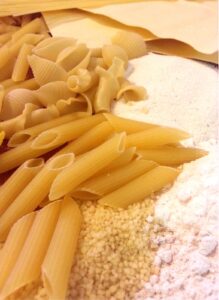
This is the question that confuses many: Is gluten good or bad? The short answer is, it can be both. There are people who can eat gluten without issues their entire lives and there are people who get extremely anaemic if they eat gluten for a while. With so many different stories and experiences, people get confused. The media have done a good job convincing people of the dangers of gluten and people across the globe have cut it out of their diets in hopes it will benefit their digestion, help them lose weight and keep them healthy. But are all these claims true? To answer this question, we first have to look at what gluten is and what role it plays in our body.
What is gluten?
When we talk about gluten we talk about it as if it was a single substance, when in fact it’s the name for an entire group of proteins found in certain grains. Wheat, rye, barley and spelt are examples of grains containing gluten. Even grains that don’t naturally contain gluten, such as oats, may contain varying amounts due to cross-contamination when different types of grains are grown in close proximity to each other.
At its core, gluten acts like a binder that holds the food together and makes it elastic. Imagine bread or pizza dough. Without gluten, the dough would be tough and crumbly.
Gluten can be good for your body

Gluten has no nutritional value on its own. Products made with gluten, however, can be very important for our health. Grains contain a lot of fibre, iron, calcium, zinc, vitamins B1, B2 and B3 as well as folic acid. If we completely cut everything containing gluten from our diet, we risk cutting these highly important nutrients as well. A study carried out in 2017 that included 100.000 people shows that people who don’t eat gluten have an increased risk of developing cardiovascular disease and type 2 diabetes, suffering a stroke and gaining weight because they simply can’t replace the lost nutrients from wholemeal products.
Gluten also acts as a probiotic because it feeds the good bacteria in our digestive tract. It contains arabinoxylan, a probiotic carbohydrate that stimulates the bifidobacteria in our gut. If we don’t have enough of this bacteria, we risk developing digestive conditions or even bowel cancer.
So why does gluten have such a bad reputation?
The bad reputation is likely because of all the bad publicity. The gluten-free industry is very profitable and a lot of money goes into marketing. To remain profitable, it’s necessary to convince enough people that they need gluten-free products. Statistics show that advertising is certainly working. The largest percentage of people buying gluten-free products are those who have no medical reason to cut gluten out of their diets. When asked why they choose a gluten-free lifestyle, the most common answers are ‘because it’s healthy’ and ‘it’s better for my digestion’. The interesting part here is that so far nobody has been able to scientifically prove that gluten has any negative effect on our health (except for people who have medical conditions such as celiac disease). Yet a growing number of people is convinced that gluten can’t be part of a healthy diet.
It’s possible that gluten ended up in the unhealthy category because it’s associated with high-sugar products made from plain flour.
White bread = unhealthy therefore gluten = unhealthy
Of course, it’s not just plain flour that contains gluten and this is where the problem appears. Cut gluten and you won’t only cut plain flour, you will cut a wide range of grains and wholemeal products.
When is gluten bad?
Gluten becomes problematic when a person experiences negative side effects. The protein group we call gluten is partially resistant to the enzymes in our digestive tract and so certain amino acids can pass through the walls of our intestine into our body. For most people, this causes no issues, but there is a small percentage of people who react to this in the same way they would react to toxins. In these people, gluten will trigger an autoimmune response. Side effects include fatigue, bloating, constipation, diarrhoea, and in serious cases such as with celiac disease or wheat allergy even anaemia, weight loss, malnutrition and damage to the intestines.
It is important to note that gluten is only problematic for people who have returned a positive celiac test and people who have a physical reaction after eating gluten. If you experience no discomfort after ingesting gluten, you are all good and can continue eating it.
Celiac disease
Approximately 1% of the population has celiac disease. Unfortunately, over 80% of people who have celiac disease are not aware of it as they haven’t been diagnosed yet. These people are in danger of causing damage to their bodies by continuing to eat gluten.
Celiac disease is diagnosed with a blood test or a biopsy of the small intestine. If you suspect you have celiac disease, do not stop eating gluten before you have had the test as it can affect the results. See your doctor before changing your diet.
Celiac disease increases a person’s risk for osteoporosis and anaemia because the body is not effectively absorbing calcium and iron. Lucky for anyone with celiac disease, these negative effects will disappear once gluten is removed from their diet.
In the case of celiac disease, a gluten-free diet is necessary as a medical treatment. It’s important to note that all the food that is cut from the diet has to be replaced with the right gluten-free options. If we only remove gluten, we risk depriving our body of the essential nutrients it needs to function properly.
Wheat allergy
Some people are allergic to one or more proteins found in wheat. It shows as a rash, itchy mouth and throat, itchy eyes, trouble breathing and in the worst cases even anaphylaxis. A wheat allergy is most common in children and quite often it will go away by the time a person reaches adulthood, but it can remain and is found in adults as well.
Gluten intolerance or gluten sensitivity
Gluten intolerance is not the same as celiac disease. Celiac disease is something people can get tested for, but a person with gluten intolerance will most likely return a negative test when tested for celiac disease. The difference is that with celiac disease, the body reacts to gluten by triggering an immune response. If a person with celiac disease keeps eating gluten, it can cause long-term harm to the body. With gluten intolerance, there is short-term discomfort like bloating or belly pain, but no long-term harm to the body. Despite causing no long-term harm, it’s still advisable to avoid gluten for anyone with gluten intolerance.
If you experience no physical discomfort, you have no reason not to eat gluten as any real issues will always cause a physical reaction.
Dermatitis
Some people experience dermatitis as a side effect of eating gluten. It’s an autoimmune response where a red, itchy rash appears on the skin. People with celiac disease often get this type of dermatitis, but it can appear in people who don’t have celiac disease as well.
Does gluten affect mental functions?
There have been claims that gluten affects mental functions, but if you are worried after reading such claims, you can rest assured there is nothing to them. Extensive research that followed 13.500 women for 28 years has found absolutely no connection between gluten and mental abilities. They measured reaction time, focus and concentration, memory and other mental abilities and eating or avoiding gluten made no difference. If a person doesn’t have celiac disease or a wheat allergy, there is no evidence that gluten would cause inflammation in the brain or have any kind of negative effect on our mental health.
What to eat if you have to cut gluten out of your diet for medical reasons?
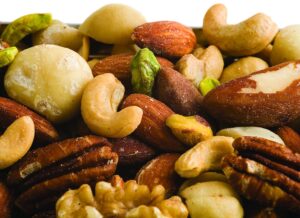
If you have a medical reason for wanting to cut gluten out of your diet, you have to make sure you replace the lost nutrients with good and healthy gluten-free equivalents. Here is a list of replacements:
- replace plain flour with almond flour, coconut flour, cornstarch, potato flour, soy flour, millet flour
- replace grains containing gluten with buckwheat, quinoa, rice, corn, oats (make sure the oats are labelled as gluten-free), amaranth
Be careful when buying products where wheat can be added, but is not noticeable. Quite often wheat or wheat products are added to yoghurts, soy sauce, chocolate and even dried fruit to prevent it from sticking together.
Gluten is often used as a binding agent in cosmetics and beauty products, food supplements and medications, so make sure you check the labels!
When going gluten-free, also make sure to find healthy alternatives. Too often people replace food items with convenient gluten-free products, but those are not nutritious nor are they a good replacement. Gluten-free biscuits, crackers and similar products are not a healthy option just because they have the gluten-free label, despite what the companies producing them want you to believe. A gluten-free biscuit is still a biscuit, the only difference is that it’s made with refined rice, corn or tapioca flour instead of wheat flour. If you need a snack, try nuts, seeds or fruit, they are gluten-free and nutritious.
So is gluten good or bad?
Nowadays people pay more attention to gluten than they did in the past. In a way that’s a good thing because it means more gluten-free food options now exist and this makes it much easier for people with celiac disease or wheat allergy to find good alternatives compared to a generation ago. At the same time, we can see gluten being unnecessarily categorised as unhealthy and problematic.
Don’t let the marketing tricks fool you. The people telling you gluten is bad are likely trying to sell their 10th book of gluten-free recipes or promote yet another brand of gluten-free treats (which, by the way, are unhealthy despite containing no gluten, just check the salt or sugar levels).
If you experience no pain or discomfort after eating gluten, you have no reason not to keep eating it.